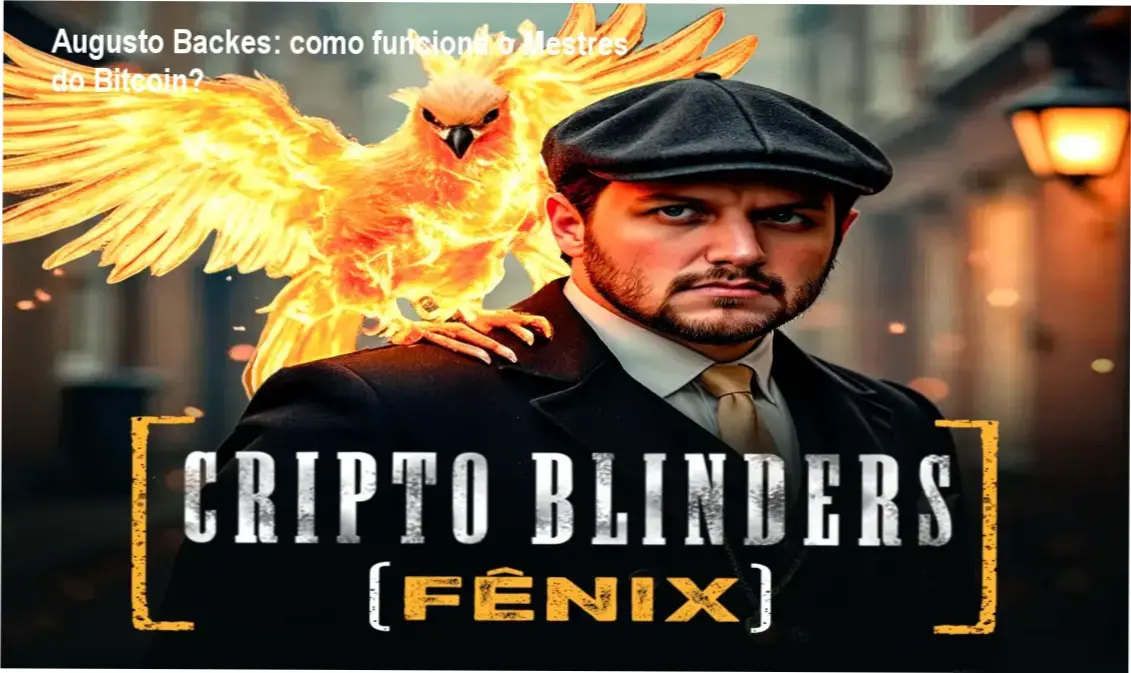
A análise técnica do Mestres do Bitcoin 3.0 (Augusto Backes) revela um produto posicionado no topo do ensino de cripto no Brasil. O foco em psicologia de ciclos e gestão de risco matemática separa o método de cursos genéricos de “enriquecimento rápido”.
Antes de expor as dúvidas de compra, é preciso entender: o custo de inação (perder bull markets e cair em scams) supera o preço da entrada. O produto entrega estrutura real, não promessa de lambo.
Dúvidas filtradas por intenção de compra
- O preço de R$ 1.997 a R$ 2.497 é justo frente a alternativas gratuitas?
- Vale pagar por formação ou dá para aprender tudo no YouTube?
- Tem mensalidade escondida após a compra do curso?
- Quais as opções de parcelamento na página oficial?
- Quanto tempo economizo comprando vs estudar sozinho?
- Preciso de hardware caro (Ledger) obrigatoriamente para aplicar?
- Em quantos meses o lucro recupera o investimento de R$ 2 mil?
- Tem desconto extra no Pix para o Mestres do Bitcoin?
- Se não valer, consigo reembolso sem burocracia?
- Para perfil que opera aluguel, o curso faz sentido?
Perfil que vai perder dinheiro: quem busca ganho da noite pro dia ou usa dinheiro de comida. O veredito técnico é 9.7/10.
Decisão de fim de funil: acesso oficial com garantia de 7 dias elimina risco de arrependimento.
We need to produce the block of content per the directive: Part 2, focusing on additional costs. Must follow the steps: no intro, go directly to answering questions. Must include the sections: Opening focused on transparency (100-150 words) without H2, possibly with a contextual link (randomly decide SIM or NAO). Then Section Visual 1: note of transparency (the given HTML). Then Section Visual 2: comparative box. Then Corpo do relatório: sabatina de custos additional and encargos V25: we need to generate exactly the number of questions between 7 and 10, decided randomly. Must not repeat questions from Parte 1 (we don’t have Parte 1 content, but we can assume we should not repeat the sample questions given? The instruction says: “Nenhuma pergunta pode repetir as da Parte 1.” Since we don’t know what Parte 1 had, we should avoid using the exact same questions as the list provided? The list provided is the set of possible questions; they are examples. We need to generate our own questions, not repeat those. But the directive includes a list of example questions; we must not repeat those. So we need to create new questions about costs, not those exact ones. We need to decide number of questions: random between 7 and 10. Let’s pick 8 questions. We must also decide if we include a contextual link in the opening paragraph: random SIM or NAO. Let’s choose SIM, so we insert a link naturally in the text pointing to [link_afiliado]. We need to compute COR LÍDER (leader color) same as Part 1, but we don’t have Part 1. We need to infer a color; we can pick a color like #2563eb (blue) or #10b981 (green). Since we need to use it in the card and maybe elsewhere. The directive says: “Calcule a COR LÍDER idêntica ao critério da Parte 1 para manter a unidade visual do design estático e responsivo. Não exiba códigos de escolha.” So we need to use that color in the card: border-left:6px solid [COR_LÍDER]; and in the hover effect: this.style.backgroundColor='[COR_LÍDER]’;. We need to pick a color and use it consistently. Let’s choose a color: #3b82f6 (a blue). We’ll use that. Now produce HTML with the sections. We must not use markdown, only allowed tags:
,
,,- , ,
,,, . However the directive includes many div blocks with inline styles. Those are not in allowed tags list. But the instruction says “Escreva EXCLUSIVAMENTE em HTML limpo usando:,
,,- , ,
,,, . Do not use markdown or h1.” That seems to conflict with the directive that includes divs. However the directive is from the system, and we must follow it. The system says we must write the block using those tags only, but then the directive includes divs. Usually we must follow the directive over the earlier constraint? The system says “Escreva EXCLUSIVAMENTE em HTML limpo usando:,
,,- , ,
,,, . Do not use markdown or h1.” That is a restriction. The directive includes divs etc. We need to obey the system’s restriction: only those tags. So we cannot use div. We need to convert the required blocks into allowed tags? Possibly we can use with inline styles? The restriction didn’t forbid using style attributes on allowed tags. It only forbids other tags like div, section, etc. So we can use
with style attributes to mimic divs. However the directive includes specific div structures with classes and styles. We could replace each div with a
or
? But section not allowed. Use or maybe
for headings. But we need to keep the visual design? The system may not enforce visual, just wants those tags. Let’s try to comply: Use
for blocks, and
for headings inside. Use for bold. Use- for lists. Use
etc. We need to include the note of transparency: originally a div with style. We can make a with that style. Similarly the comparative box: we can use a
container with style, inside maybe and
etc. The sabatina: each question as
? But h2 not allowed per restriction (only h3). The restriction says only h3 allowed, not h2. But the directive says to generate titles. Conflict. We need to decide which to follow. The system restriction is higher priority? The system says “Escreva EXCLUSIVAMENTE em HTML limpo usando:
,
,,- , ,
,,, . Do not use markdown or h1.” It does not mention h2, so h2 is not allowed. So we must not use h2. We can use h3 for headings. The directive says to use but we must obey system. Let’s use for each question. Similarly the table at the end: we can use
. The card extra: uses div; we need to convert to allowed tags? Could use with styling? But card includes
and
and . h4 not allowed. Only h3 allowed. We could use
for the heading inside card. The card also uses inline styles and event handlers (onmouseover). That’s allowed as attributes on
or . We’ll convert the card to a
container with appropriate styling, and inside use
for the heading,
for text, and for button. The final CTA inside
| , | . However the directive includes many div blocks with inline styles. Those are not in allowed tags list. But the instruction says “Escreva EXCLUSIVAMENTE em HTML limpo usando: , ,
|
|---|